


From Nairobi to COP17: Building the next generation of young biodiversity policy leaders.
Youth at the Heart of Biodiversity Decision-Making
The 28th meeting of the Subsidiary Body on Scientific, Technical and Technological Advice (SBSTTA-28) and the 7th meeting of the Subsidiary Body on Implementation (SBI-7) were held in Nairobi from 27 July to 12 August 2026. The meetings served as important technical and implementation milestones ahead of the 17th Conference of the Parties (COP17) to the Convention on Biological Diversity (CBD).
For the Kenyan Youth Biodiversity Network (KYBN), the meetings presented an opportunity to move beyond simply being present in international policy spaces and to engage directly with the technical and policy discussions shaping implementation of the Kunming-Montreal Global Biodiversity Framework (KMGBF).
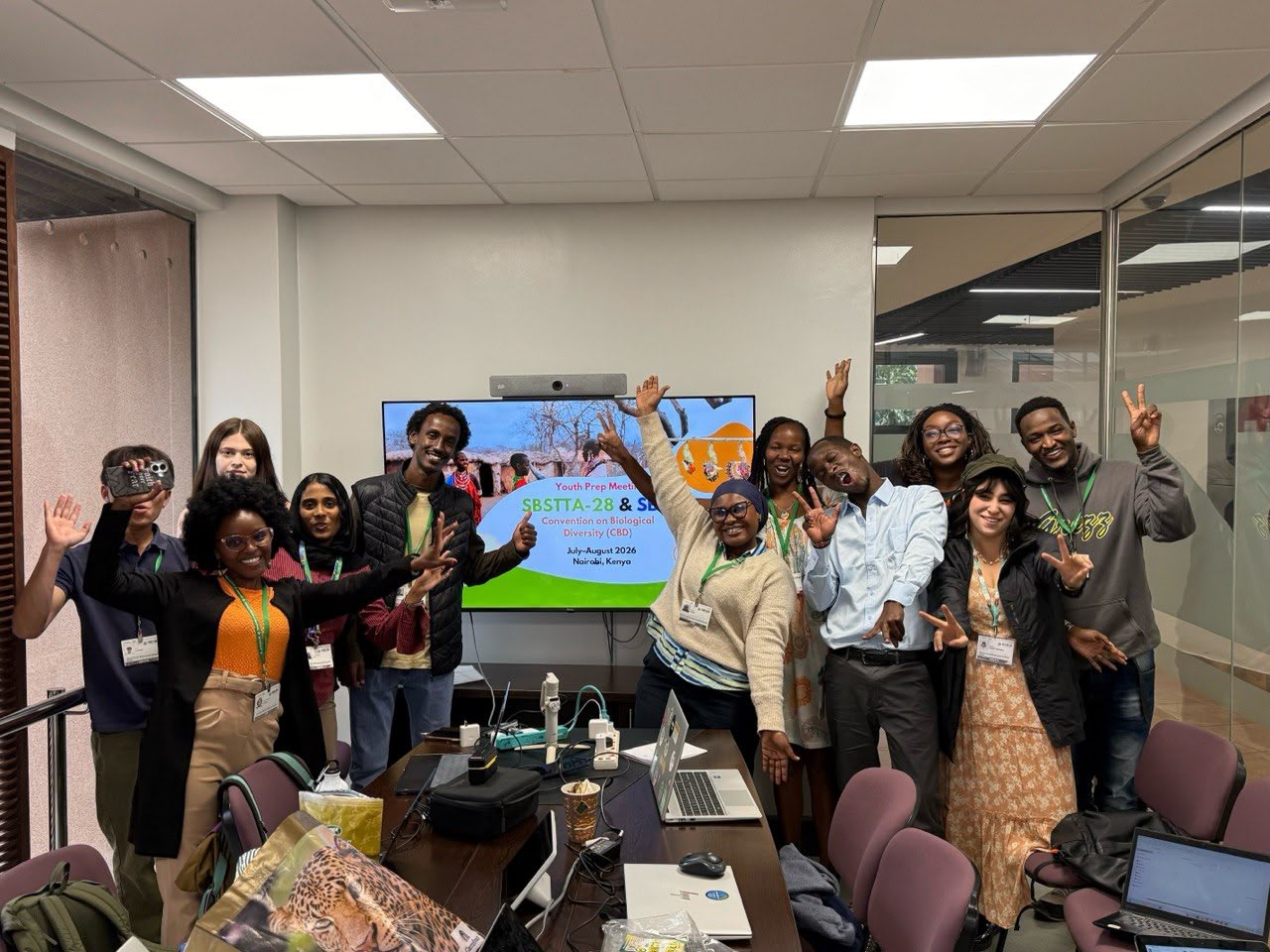
KYBN mobilized 25 members to participate in the Nairobi meetings. The members followed agenda items relating to youth and biodiversity, engaged with other stakeholders, and gained practical exposure to how international biodiversity decisions are developed and negotiated.
For young people who had little or no previous experience with multilateral negotiations, the meetings provided an opportunity to develop practical skills while nurturing their leadership and understanding of international biodiversity governance.
Learning How Biodiversity Negotiations Work
Participation went beyond attending plenary sessions. KYBN members followed discussions as issues moved through different stages of the negotiation process, including plenary sessions, contact groups, side events and other spaces for exchange and learning.
In plenary sessions, members observed Parties and observers present their positions. In contact groups, they followed discussions as draft text was examined paragraph by paragraph, with governments proposing additions, deletions and alternative wording.
Members also observed how issues could be placed in brackets for further discussion and how informal consultations were used to address areas of disagreement.
This practical exposure was particularly valuable in demonstrating that biodiversity negotiations require more than knowledge of conservation issues. Participants also need to understand the language, procedures and negotiation dynamics through which international decisions are developed.
Focus on Marine and Coastal Biodiversity
One of KYBN’s main areas of focus during SBSTTA-28 was Agenda Item 8 on Marine and Coastal Biodiversity.
Members closely followed discussions from the opening plenary through subsequent contact group negotiations. The discussions covered issues including Ecologically or Biologically Significant Marine Areas (EBSAs), marine and coastal biodiversity, scientific and technical guidance, area-based conservation and the relationship between CBD processes and the Agreement on Biodiversity Beyond National Jurisdiction (BBNJ Agreement).
The contact group discussions provided members with a detailed view of how technical issues are translated into negotiated text. Discussions included the composition and participation of an Informal Advisory Group, including proposals concerning representation of Indigenous Peoples and local communities, women and youth.
Members also followed substantive discussions around EBSAs and area-based conservation. During one contact group session, Kenya supported retaining language concerning aquatic species and area-based conservation, linking the discussion to Target 3 of the KMGBF, while other Parties proposed alternative wording and approaches.
For participating youth, these discussions provided a practical demonstration of how seemingly small changes in language can affect the scope and interpretation of international biodiversity decisions.
From Observers to Contributors
KYBN members also contributed to the wider youth constituency by reading and delivering statements on behalf of the Global Youth Biodiversity Network (GYBN) across different agenda items, including discussions related to the Intergovernmental Science-Policy Platform on Biodiversity and Ecosystem Services (IPBES).
This provided a direct opportunity for Kenyan youth to communicate collective youth priorities within formal CBD spaces and contribute to positions developed through the wider youth constituency.
Youth interventions emphasized the importance of meaningful youth participation, capacity building, and access to financial and technical resources to enable young people to contribute effectively to implementation of the KMGBF and National Biodiversity Strategies and Action Plans (NBSAPs).
Engagement Beyond the Negotiation Rooms
The KYBN delegation’s engagement extended beyond formal negotiations. Members participated in side events, networking spaces and discussions with youth and biodiversity stakeholders.
These spaces provided opportunities to exchange experiences, learn how other youth networks are engaging with the CBD, and identify opportunities for collaboration.
They also offered a more accessible environment for discussing issues that can be difficult to explore within highly technical negotiation rooms.
Together, plenary participation, contact group tracking, formal statements and side events gave members a broader understanding of the CBD process — from the introduction of an agenda item, through technical and political debate, to negotiation of text and consideration of outcomes.
What the Nairobi Engagement Achieved
Increased Youth Engagement
KYBN mobilized 25 members at the beginning of the process, with participation increasing as the meetings progressed. This reflected growing interest among Kenyan youth in engaging with international biodiversity policy and decision-making.
Improved Understanding of CBD Processes
Members gained practical exposure to plenary sessions, contact groups, agenda-item discussions and side events, strengthening their ability to follow technical issues and understand how negotiation positions are translated into draft text.
Strengthened Technical Knowledge
Following Agenda Item 8 provided members with deeper exposure to issues including EBSAs, area-based conservation, marine biodiversity beyond national jurisdiction, scientific and technical guidance and the relationship between the CBD and other international processes.
Direct Youth Contribution
Through reading and delivering GYBN statements, KYBN members gained a direct mechanism for bringing youth perspectives into formal CBD discussions, including IPBES-related discussions.
Stronger Youth Coordination
Participation strengthened connections between KYBN and the wider GYBN constituency while creating opportunities for Kenyan youth to coordinate with young people from different countries and backgrounds.
Stronger National-Global Linkages
The experience strengthened KYBN’s ability to connect global biodiversity discussions with national processes, particularly Kenya’s ongoing National Biodiversity Strategy and Action Plan (NBSAP) development, where youth perspectives are being captured.
Why Meaningful Participation Matters
The Nairobi meetings demonstrated the difference between youth presence and meaningful youth participation.
Having 25 KYBN members actively engaged created a pool of young people who were not only exposed to the CBD process, but also gained practical experience in tracking negotiations, understanding technical language, communicating collective positions and engaging with different stakeholders.
The experience also highlighted the importance of investing in young people before and during international policy processes. Effective participation requires young people to understand the issues, prepare around specific agenda items, coordinate positions and have opportunities to contribute within formal and informal spaces.
For KYBN, the marine and coastal biodiversity discussions were particularly valuable because they provided a practical learning experience around a complex technical agenda. Members were able to observe how technical and political considerations interact during negotiations and how changes in wording can influence negotiated outcomes.
The engagement reinforced the importance of ensuring that youth participation continues beyond international meetings and translates into national implementation, advocacy and monitoring.
Lessons for Future Youth Engagement
- Preparation is essential. Following technical agenda items effectively requires prior review of documents, terminology and negotiation history.
- Youth need technical capacity, not only participation spaces. The complexity of discussions such as marine and coastal biodiversity demonstrates the importance of continuous capacity building.
- Different negotiation spaces require different approaches. Plenaries provide an overview of positions, while contact groups offer deeper opportunities to understand how text is negotiated.
- Side events complement formal negotiations. They provide opportunities for learning, networking and building partnerships that may not be possible within formal sessions.
- Youth statements are an important advocacy tool. Coordinated statements allow young people to communicate collective priorities within formal CBD spaces.
- Participation should continue between meetings. Skills and networks developed in Nairobi need to be applied within national and regional processes rather than remaining limited to COP and subsidiary body meetings.
From Nairobi to COP17
Following SBSTTA-28 and SBI-7, KYBN will build on the experience to strengthen youth engagement towards COP17 and beyond.
The next phase will focus on:
- Strengthening negotiation capacity through continued training on CBD processes, agenda analysis, negotiation tracking and policy advocacy.
- Strengthening national engagement by connecting lessons and priorities from the CBD process with Kenya’s NBSAP development and implementation.
- Expanding youth coordination with GYBN and other African youth biodiversity networks to develop shared priorities and coordinated advocacy messages.
- Increasing documentation and communication of youth experiences, including lessons from specific agenda items such as marine and coastal biodiversity.
- Advocating for stronger support for youth implementation, particularly access to capacity building, financial resources, technology and biodiversity data.
- Preparing strategically for COP17 through negotiation tracking, youth statements, side events, delegation participation and other opportunities for meaningful engagement.
Looking Ahead
KYBN’s participation in SBSTTA-28 and SBI-7 provided a practical platform for Kenyan youth to engage with biodiversity policy at an international level while strengthening their ability to contribute to national implementation.
The participation of 25 KYBN members, together with the wider engagement of the GYBN youth constituency, enabled young people to follow a broad range of agenda items, with Marine and Coastal Biodiversity (Agenda Item 8) serving as one of the key areas of focus.
Members moved through different stages of the CBD process, from plenary discussions to detailed contact group negotiations and side events, while also contributing through GYBN youth statements.
The experience therefore generated value beyond attendance. It contributed to knowledge, negotiation skills, youth representation, networking and stronger connections between international biodiversity policy and Kenya’s national biodiversity processes.
Most importantly, the Nairobi experience strengthened the foundation for continued youth engagement towards COP17 and demonstrated the importance of providing young people with the access, preparation and support needed to participate meaningfully in the technical processes that shape biodiversity policy and implementation.


